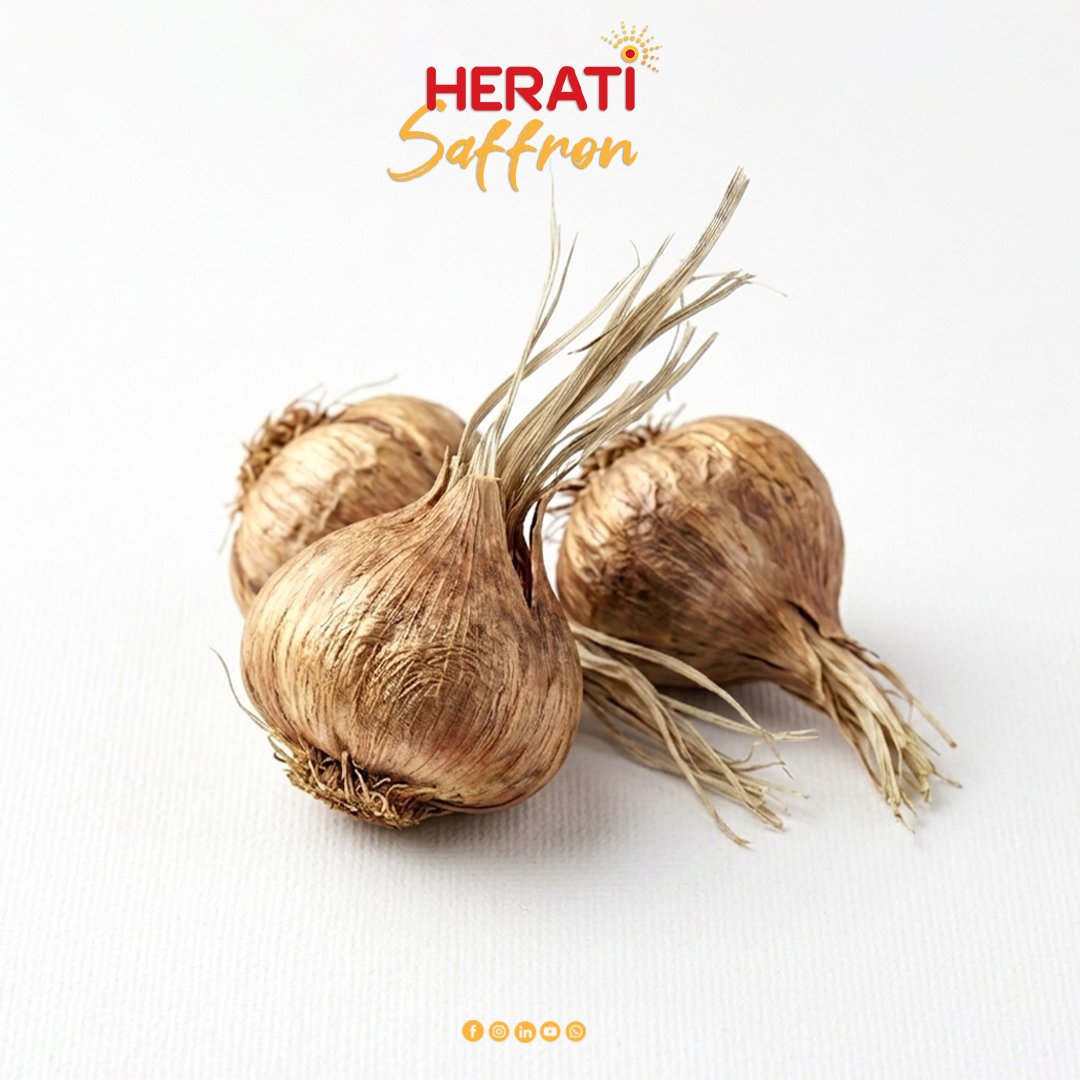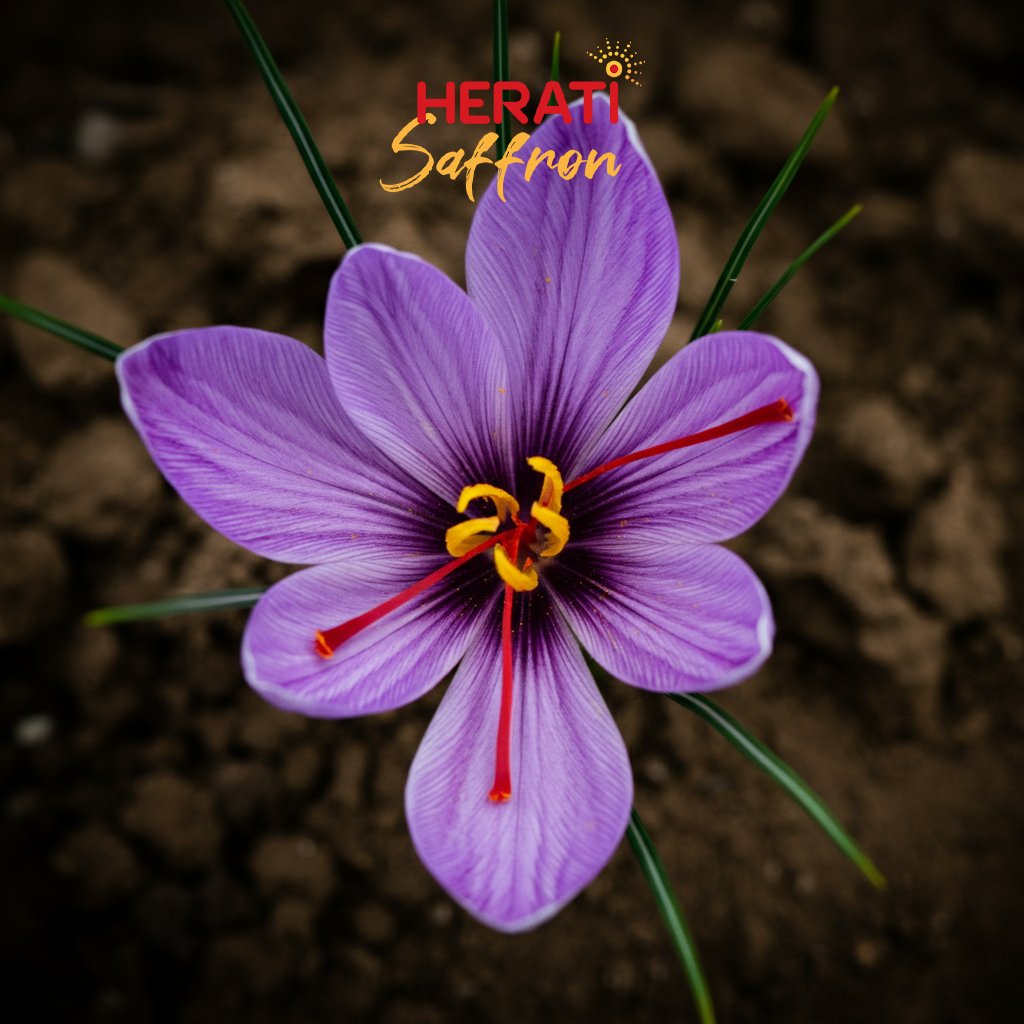

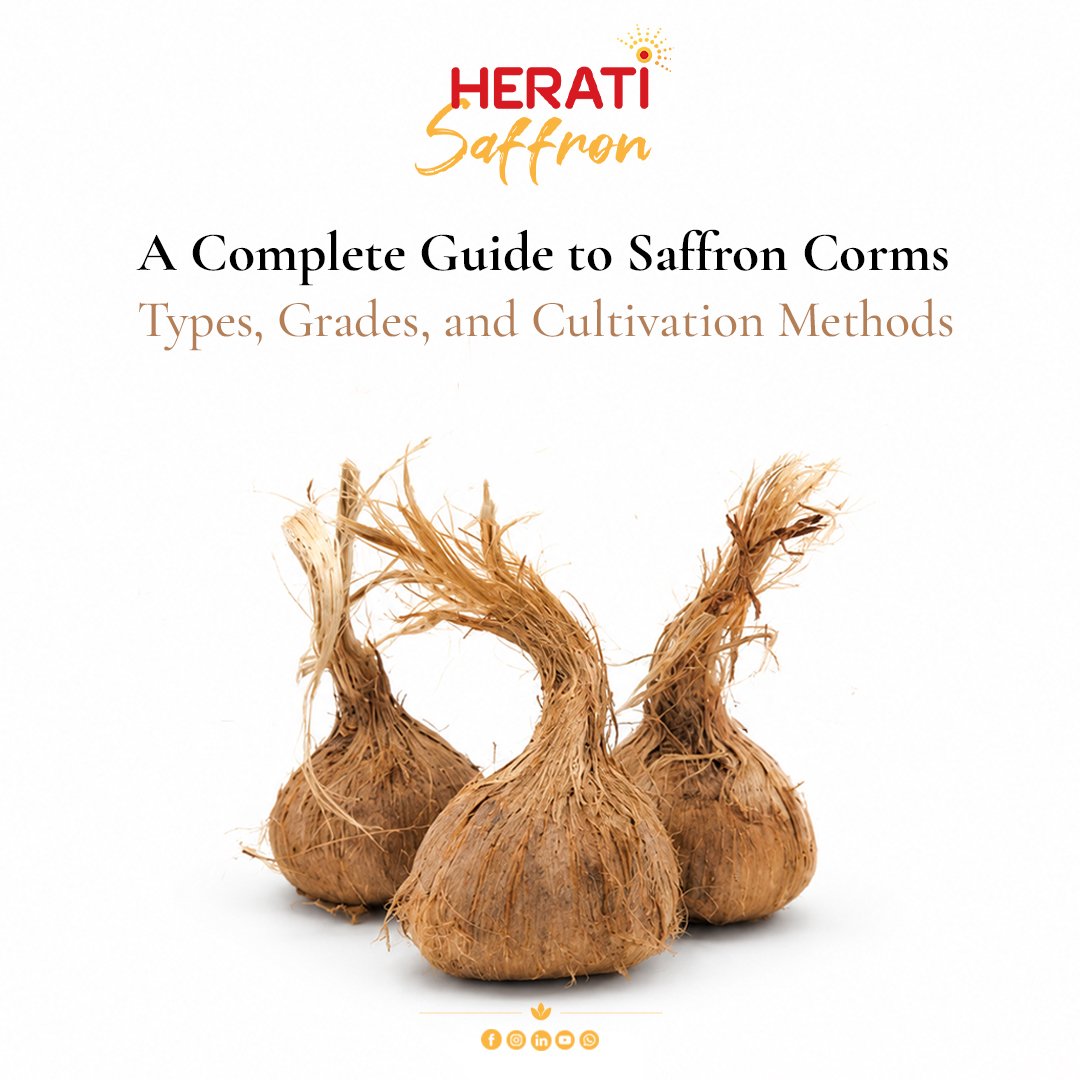
Saffron (Crocus sativus) is the world’s most precious spice, valued for its rich aroma, vibrant color, and medicinal properties. While many know saffron for its threads, successful cultivation starts underground with the saffron bulb botanically known as a corm.
If you plan to start a saffron farm, a greenhouse setup, or a home garden, understanding the different types and grades of saffron corms is crucial for yield efficiency and bloom quality.
What is a Saffron Corm?
Botanically, saffron does not grow from standard seeds or true bulbs. It propagates through corms fleshy, underground stem bases covered in a fibrous tunic. Each corm produces flowers in the autumn and creates new “daughter” corms underground during its growing season.
Classification of Saffron Corms by Weight & Size
In commercial trade, saffron corms are categorized primarily by weight (in grams) and diameter. The size of the corm directly determines whether it will flower in its first year and how many flowers it will produce.
| Corm Grade | Weight Range | Diameter | Best Used For | First-Year Bloom Rate |
|---|---|---|---|---|
| Small (Grade 3) | Under 5 grams | < 2.5 cm | Soil propagation & reproduction fields | Very low (< 10%) |
| Medium (Grade 2) | 5 – 10 grams | 2.5 – 3.5 cm | Traditional open-field farming | Moderate (40% – 60%) |
| Large (Grade 1) | 10 – 15 grams | 3.5 – 4.5 cm | High-yield field planting & greenhouses | High (80% – 90%) |
| Jumbo / Premium | Over 15 grams | > 4.5 cm | Hydroponic & Soilless Greenhouses | Guaranteed (100%, multiple flowers) |
1. Small Corms (< 5g)
These corms are too young to support flower production during their first harvest season. Farmers plant small corms in propagation beds to allow them to mature into larger corms for future seasons.
2. Medium Corms (5 – 10g)
Standard choice for traditional multi-year field planting. While first-year flower yield is moderate, medium corms offer a cost-effective long-term investment as they multiply rapidly underground over a 5 to 7-year cycle.
3. Large & Jumbo Corms (> 10g)
The preferred choice for high-density farming and controlled-environment agriculture. Large corms store sufficient nutrients to produce 2 to 4 flowers per corm in the very first season.
Types of Saffron Corms by Cultivation System
Beyond physical size, saffron corms are classified based on the farming environment they are prepared for:
1. Traditional Field Corms
- Soil Requirements: Well-drained, sandy-loam soil with a neutral to slightly alkaline pH (7.0 – 8.5).
- Planting Depth: 15 – 20 cm deep to protect from summer heat and winter freezing.
- Lifespan: Remains in the ground for 5 to 7 years before needing division.
2. Greenhouse / Hydroponic Corms
- Selection: Requires large or jumbo corms (> 12g).
- Process: Corms are harvested in late spring, kept dormant under climate control, and placed in darkness/cooling chambers to induce rapid flowering without soil.
- Advantage: Higher flower yield per square meter, protected from weather hazards and field pests.
💡 Pro-Tip: Inspecting Corm Health
When buying saffron corms, always check that they are firm, free of soft spots, and have a clean, dry outer tunic. Avoid corms showing signs of moisture, mold, or active root growth during the dormancy window (June to August).
How to Select Quality Saffron Corms
When purchasing saffron corms for commercial or personal use, inspect for these key health indicators:
- Firmness: The corm should feel dense and solid to the touch, not soft or spongy.
- Clean Tunic: Fibrous outer husk should be intact, dry, and free of dark mold or rot.
- Pest-Free: Inspect closely for signs of mites, nematodes, or fungal spots (Fusarium rot).
- Dormancy State: Best purchased during summer dormancy (June through September) before top shoots begin active growth.